


10 Sep In-House vs Outsourced HVAC Maintenance
Summary:
Most facility managers don’t set out to make HVAC maintenance complicated. You just want the systems running, the bills predictable, and one less thing keeping you up at night. But somewhere between the technician who quit, the emergency repair that blew the Q3 budget, and the warranty claim that got denied, the question becomes unavoidable: is in-house maintenance actually working, or is it just familiar?
This page breaks down both sides honestly — the real costs, the real risks, and the decision framework that helps you figure out which model actually fits your facility.
Commercial HVAC Maintenance: What It Actually Costs to Do It In-House
The in-house model looks straightforward on paper. You hire a technician, you pay a salary, and your systems get maintained. But the salary is only the beginning of the cost picture.
When you factor in benefits — typically 30 to 40 percent of base pay — plus tools, ongoing training, certification renewals, workers’ compensation, and liability exposure, the real annual cost of a single qualified HVAC technician at a mid-sized commercial or industrial facility can land well above $120,000. And that’s before you account for turnover, which costs an estimated 50 to 200 percent of annual salary to recover from when a skilled technician walks out the door.
The Hidden Staffing Problem Facility Managers Rarely See Coming
Here’s the part that doesn’t show up in the initial budget conversation: the HVAC industry is in the middle of a serious labor shortage, and it’s not getting better soon. There are roughly 42,500 HVAC job openings unfilled across the country every year. About 25,000 technicians leave the workforce annually — through retirement, career changes, or attrition — and the pipeline of incoming workers isn’t keeping pace. Over half of the current HVAC workforce is approaching retirement age.
What that means practically is that if you’re trying to hire and retain a dedicated in-house HVAC technician, you’re competing against every other facility, contractor, and commercial property in your area for a shrinking pool of qualified people. Salaries are climbing. Signing bonuses are becoming common. And even when you find someone good, keeping them is its own challenge.
This isn’t a temporary hiring market blip. It’s a structural shift in the industry. Facilities that built their maintenance model around reliable in-house staffing are finding that model increasingly fragile — not because of anything they did wrong, but because the labor market underneath it has changed.
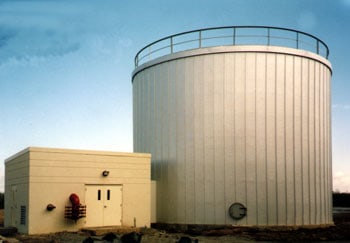
There’s also the specialization problem. A generalist maintenance technician who handles plumbing, electrical, and general repairs alongside HVAC is a common and practical solution for many facilities. But when your HVAC systems get complex — large commercial chillers, industrial refrigeration, ammonia storage, process cooling — a generalist is working at the edge of their training. Proper ammonia tank insulation can also be important for facilities operating ammonia storage systems. The consequences of improper maintenance on specialized systems aren’t just inconvenient. They can mean regulatory violations, voided warranties, or in the case of ammonia refrigeration, genuine safety incidents.
If your facility runs systems like these, the in-house model requires not just any technician, but a specifically trained and certified one. That’s a much harder hire to make and a much harder position to keep filled.
What Deferred and Reactive HVAC Maintenance Actually Costs Over Time
The Energy Star data on this is worth sitting with: unmaintained HVAC systems can consume up to 60 percent more energy than properly maintained ones. Since HVAC typically accounts for around 40 percent of a building’s total energy bill, that’s not a rounding error — it’s a significant and recurring drain that compounds every month the system runs below optimal performance.
The U.S. Department of Energy estimates that following proper operations and maintenance practices can save facilities 5 to 20 percent on annual energy costs. For a facility spending $200,000 a year on energy, that’s $10,000 to $40,000 in recoverable savings — often more than the annual cost of a well-structured maintenance contract.
Then there’s the emergency repair problem. When something fails without warning — a chiller going down in July, a refrigeration system losing temperature on a Friday night — you’re not paying standard labor rates. Emergency HVAC calls typically run 1.5 to 3 times the normal rate, plus dispatch fees averaging $250 to $600. A single unplanned repair during peak season can cost more than an entire year of preventive maintenance. And it usually comes with downtime that has its own operational and financial consequences.
The pattern that plays out in facilities without a structured maintenance program is predictable: deferred maintenance leads to accelerated equipment degradation, which leads to more frequent failures, which leads to higher emergency repair costs, which leads to shorter equipment lifespan and earlier capital replacement. Each step in that chain is more expensive than the one before it. A preventive maintenance contract interrupts that cycle before it starts.
Outsourced HVAC Services: What a Good Contract Actually Covers
Not all HVAC maintenance contracts are built the same, and understanding the differences matters before you sign anything. The three most common structures are preventive-only contracts, full-service or comprehensive contracts, and time-and-materials agreements.
A preventive-only contract covers scheduled inspections and routine maintenance — filter changes, coil cleaning, electrical checks, lubrication, refrigerant levels — but stops short of covering major component failures. A full-service contract extends that coverage to include parts and labor for repairs up to agreed thresholds. Time-and-materials agreements are essentially on-call arrangements with no scheduled maintenance built in, which tends to be the most expensive model in practice because it defaults to reactive rather than preventive care.
Facility Maintenance Contracts: What the SLA Terms Should Actually Guarantee
The service level agreement — the SLA — is where a maintenance contract either earns its value or reveals its limitations. This is the section that defines how fast a provider responds when something goes wrong, and it deserves more scrutiny than most buyers give it during the contract review stage.
A well-structured SLA for commercial HVAC maintenance typically defines response time tiers based on severity. Critical failures — a system down in a production environment or a temperature-sensitive storage facility — should carry a two-hour response commitment. Urgent but non-critical issues typically fall under a four-hour window. Standard maintenance requests are usually handled within eight hours. If a contract you’re reviewing doesn’t define these tiers clearly, that’s worth flagging before you sign.
Beyond response time, look at what the contract says about documentation. Every service visit should generate a written record: what was inspected, what was found, what was done, and what parts were used. This matters for two reasons. First, most HVAC equipment warranties require documented proof of ongoing professional maintenance to remain valid. A system that’s been maintained informally — or by uncertified technicians — may have its warranty voided at exactly the moment you need it most. Second, if your facility operates in a regulated industry — food processing, pharmaceutical, chemical storage — those service records are part of your compliance documentation. Auditors ask for them.
One angle that often gets overlooked in the outsourcing conversation is liability. When your in-house technician makes an error that damages equipment or contributes to a system failure, the liability stays with your organization. Under a properly structured outsourced contract with adequate insurance requirements, that liability transfers to the contractor. For industrial facilities where system failures can have serious operational or safety consequences, that’s not a minor consideration.
Consolidating multiple systems or multiple sites under a single maintenance provider also opens up negotiating leverage that the in-house model can’t replicate. Multi-unit contracts typically yield 10 to 20 percent discounts compared to per-unit pricing. If you’re managing a facility with a large HVAC asset count, or operating across multiple locations, that adds up quickly.
How to Decide: A Practical Framework for Facility Managers
There’s no universal right answer between in-house and outsourced HVAC maintenance. The right model depends on your facility’s size, system complexity, staffing capacity, and risk tolerance. But there are some clear patterns that help most facility managers work through the decision.
In-house maintenance tends to make the most sense for very large facilities — typically those with 50 or more HVAC units — that have a dedicated engineering department, stable staffing, and systems that are relatively standardized. In those environments, the volume of work justifies the overhead, and institutional knowledge of the specific equipment is genuinely valuable.
For most commercial and industrial facilities, outsourcing is the stronger model. If your systems are specialized — ammonia refrigeration, process cooling, extreme-temperature storage, industrial chillers — the argument for outsourcing becomes even clearer, because finding and retaining technicians with the right certifications and hands-on experience for those systems is genuinely difficult. EPA Section 608 certification is a federal requirement for anyone handling refrigerants. NATE certification signals advanced competency. And with refrigerant regulations shifting — R-410A systems are no longer being manufactured as of 2025, and the transition to lower-GWP alternatives is underway — the training demands on in-house staff are increasing, not decreasing.
Multi-site operations almost always benefit from outsourcing, because consolidation creates economies of scale and simplifies vendor management. And facilities in regulated industries benefit from the documentation discipline that a professional maintenance provider builds into every visit.
The honest version of this decision comes down to one question: can you reliably staff, train, and retain the technical expertise your systems actually require? If the answer is yes, in-house can work. If there’s any uncertainty in that answer — and for most facilities right now, there is — a well-structured outsourced contract is the lower-risk path.
Choosing the Right HVAC Maintenance Approach for Your Facility
The in-house versus outsourced decision isn’t really about preference — it’s about what your facility’s systems actually demand and whether your current model can deliver it consistently. When you run the full cost comparison honestly, account for the labor market realities, and look at what a strong maintenance contract actually provides, the picture gets a lot clearer for most facility managers.
The facilities that tend to get this right are the ones that stop treating HVAC maintenance as a fixed overhead line and start treating it as a risk management decision. Because the cost of getting it wrong — in emergency repairs, energy waste, compliance exposure, and equipment that ages faster than it should — is almost always higher than the cost of getting it right from the start.
If you’re working through this decision for a commercial or industrial facility, we bring over five decades of experience in industrial thermal management to the conversation. We’ve worked on more than 10,000 systems across some of the most demanding environments in the industry, and we’re glad to help you think through what the right maintenance approach looks like for your specific situation.