


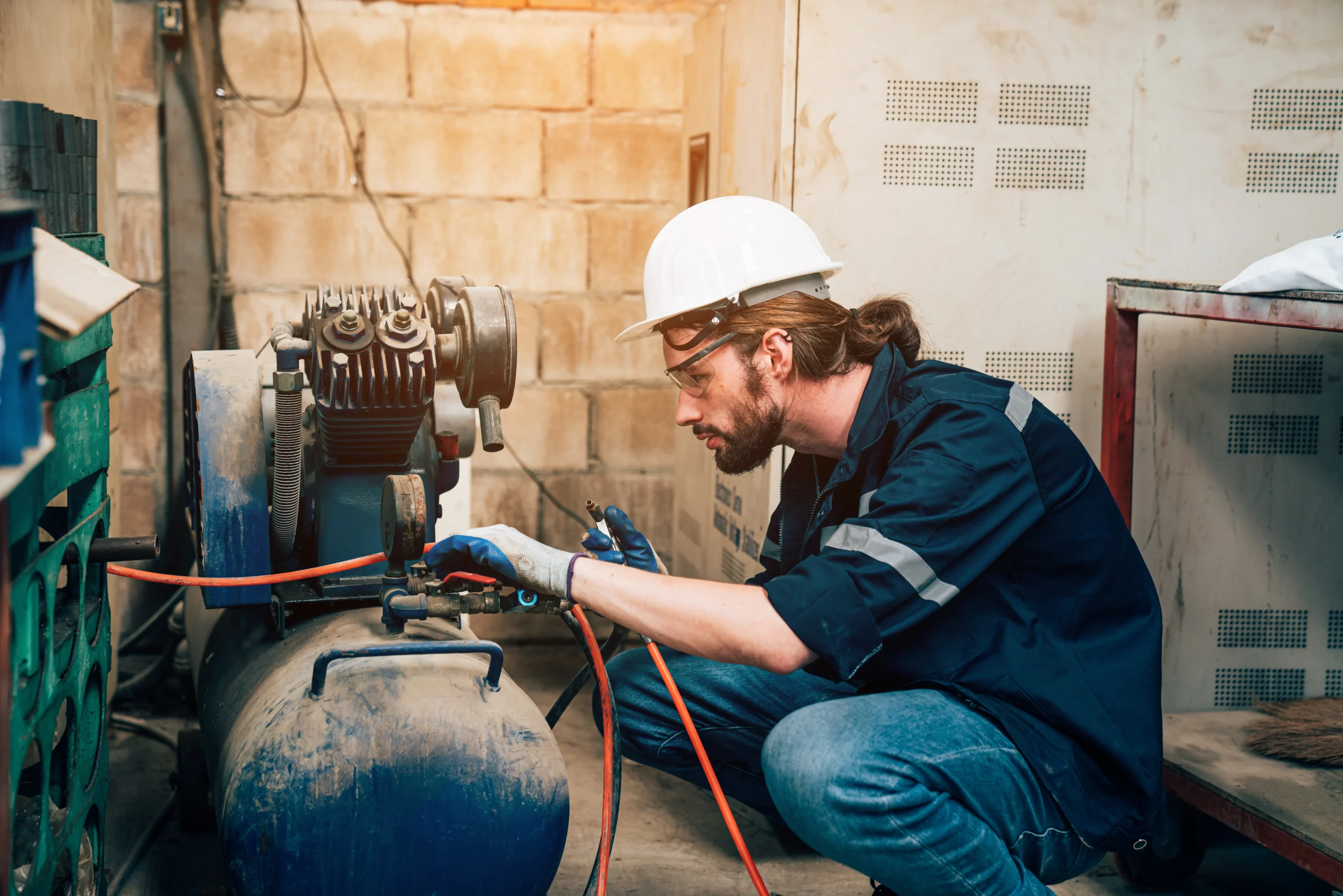
17 Sep Emergency HVAC Repair Costs After Hours in [TOWN]
Summary:
Your HVAC system doesn’t care that it’s 11 p.m. on a Saturday. It fails when it fails — and when it does, the clock starts running on costs you didn’t budget for. In [TOWN], emergency repair rates are steep, and they catch most facility managers off guard the first time. What you’re looking for right now is a straight answer: what does this actually cost, and is it worth it? We’ve been working in industrial thermal systems since 1971, and we’ve seen what happens when temperature control fails at the worst possible moment. Here’s what you need to know.
Emergency HVAC Repair Cost: What to Expect in [TOWN]
The short answer is that emergency HVAC repair costs significantly more than a standard daytime call — typically two to three times more. In [TOWN], most emergency service visits run between $300 and $1,200 depending on the time of day, the complexity of the system, and what actually needs to be fixed. That range is wide because the final bill is made up of several separate charges that stack on top of each other.
A standard service call fee runs $150 to $500 just to get a technician to your location. After-hours labor rates typically land between $140 and $600 per hour, compared to $75 to $150 during normal business hours. On top of that, many companies add a flat after-hours surcharge of $100 to $250 regardless of how long the job takes. By the time you factor in parts, you’re often looking at $600 to $1,100 or more for anything beyond a simple fix.
The best thing you can do before authorizing any work is ask for a written estimate that itemizes every charge — service call fee, labor rate, after-hours add-on, and parts separately. A reputable company will give you that without hesitation.
Emergency AC Repair Pricing by Component
The component that failed determines a big portion of what you’ll pay. Some repairs are quick and relatively affordable even at emergency rates. Others will make you question whether repair is the right call at all.
Capacitor replacement is the single most common emergency AC repair, accounting for roughly 30 percent of service calls. The part itself is inexpensive, but with emergency labor and after-hours surcharges, the total typically lands between $150 and $400. It’s one of the more manageable emergency repairs you’ll encounter.
Fan motor failures are more involved. Between the part cost and emergency labor, expect $400 to $700 total. Refrigerant recharges run $200 to $600 depending on the refrigerant type and how much is needed — and if your system uses a refrigerant that requires special handling or sourcing, that number can climb further.
Compressor replacements are where costs get serious. The compressor itself can run $400 to $1,200 just for the part, and total replacement costs with emergency labor often reach $1,200 to $3,500 or more. If the technician doesn’t have your specific compressor on their truck — which is common for less standard systems — you’re also looking at a return trip charge of $100 to $200 once the part arrives.
For industrial systems handling ammonia refrigeration, high-temperature processes, or extreme cold storage, parts availability is a genuine constraint. Standard HVAC distributors operate during business hours. Emergency sourcing from 24-hour suppliers carries its own premium, and specialty components for industrial-grade systems aren’t always available overnight. That’s a real cost driver that most residential-focused pricing guides don’t address — but it’s one industrial facility managers in [TOWN] run into regularly.
The takeaway here is that the component cost is only part of the equation. What you’re really paying for in an emergency is the technician’s time, the after-hours availability, and whatever it takes to source parts outside normal supply chain hours.
Why Industrial HVAC Emergencies Cost More Than Residential Calls
If you manage an industrial facility in [TOWN] — a food processing plant, a cold storage operation, a petrochemical site — the pricing benchmarks you’ll find on most HVAC cost guides don’t fully apply to your situation. Those guides are written for homeowners with a broken central air unit. The economics of industrial HVAC emergencies are different in almost every way.
First, the systems themselves are more complex. Industrial HVAC and refrigeration equipment involves higher-capacity components, specialty refrigerants, and in many cases, safety-critical applications like ammonia refrigeration that require certified technicians with specific training. Not every emergency HVAC company can legally or safely work on those systems, which limits your options and affects pricing.
Second, the downtime cost dwarfs the repair bill. A homeowner without AC is uncomfortable. A food processing facility without refrigeration is losing product, potentially violating food safety regulations, and watching revenue disappear in real time. A cold storage operation running above temperature may face regulatory consequences on top of product loss. When you’re calculating whether to call for emergency service at 2 a.m., the cost of waiting until morning has to include everything that’s happening to your operation while you wait — not just the after-hours surcharge.
Third, secondary damage accumulates faster in industrial settings. When insulation has failed or was never properly installed, HVAC and refrigeration systems work harder than they should, cycle more frequently, and run hotter or colder than their design tolerances. That kind of chronic stress accelerates component wear and makes emergency failures more likely — and more severe when they happen. A system that fails under those conditions often has more damage than a system that failed cleanly.
The repair bill is the visible cost. The operational consequences are usually larger. Understanding that relationship changes how you think about both emergency response and prevention.
After Hours HVAC Repair: Pricing and Service Factors
After-hours pricing isn’t arbitrary — it reflects real costs that emergency service providers carry to stay available around the clock. On-call staffing, overtime pay, 24-hour dispatch infrastructure, and the premium for sourcing parts outside normal distribution hours all feed into what you’re charged. Knowing how that structure works helps you evaluate quotes and recognize when something looks off.
Weeknight calls (evenings and overnight on Monday through Thursday) typically carry a 1.5x multiplier on standard labor rates. Weekend calls run 2x to 3x. Holiday emergencies in [TOWN] and major markets can push past $500 per hour for labor alone. Some companies charge a flat after-hours add-on rather than multiplying the hourly rate — that structure can actually be more predictable for longer jobs.
What matters most is asking upfront: how is the after-hours charge structured, and what’s included in the service call fee?
Weekend HVAC Service Cost: What Changes and Why
Weekend HVAC service costs more for a straightforward reason: technicians working Saturday and Sunday are on overtime or on-call pay, and companies that maintain genuine 24/7 availability carry the overhead to staff it. That cost gets passed to the customer, and it’s worth understanding exactly how.
Weekend daytime calls typically run at a 1.5x to 2x premium over standard weekday rates. Weekend overnight calls push toward the 2x to 3x range. If your emergency falls on a federal holiday, you’re looking at the highest tier — $500 per hour or more in high-cost metro markets, with flat surcharges that can add $200 to $300 before the technician has touched anything.
Peak season compounds this further. June through August for cooling systems and December through February for heating are the periods when technician availability is most constrained. When demand spikes — during a heat wave or a cold snap — response times stretch and some companies quietly add 10 to 25 percent on top of their standard emergency rates. If you’ve ever called for emergency service during a regional weather event and found that every company you tried had a 6-hour wait, this is why.
One thing worth knowing: not every company advertising 24/7 service is actually prepared to dispatch at 2 a.m. on a Sunday. Some route after-hours calls to voicemail and respond the next morning. Others subcontract emergency calls to third-party technicians who may not be familiar with your system. Before you need emergency service, it’s worth asking a prospective provider directly how their after-hours dispatch actually works — not just whether they offer it.
For industrial facilities in [TOWN], the weekend timing problem is especially acute. Production schedules don’t always align with Monday-through-Friday service availability. A failure that starts Friday afternoon can become a full weekend shutdown if the right service partner isn’t in place. Having an established relationship with a provider who knows your systems — and who you’ve already vetted for after-hours response — is worth far more than searching cold at midnight.
When to Repair vs. Replace During an HVAC Emergency
One of the hardest decisions you’ll make during an HVAC emergency is whether to authorize a repair or start thinking about replacement. You’re under time pressure, the technician is standing in front of you with a quote, and you don’t have the luxury of a week to research your options. Having a framework in your head before that moment helps.
The most widely used rule of thumb is the $5,000 Rule: multiply the age of the unit by the cost of the repair. If the result exceeds $5,000, replacement is likely the more economical path. A 10-year-old unit with a $600 repair comes out to $6,000 — that’s a signal worth taking seriously. A 3-year-old unit with the same repair comes out to $1,800, which almost always favors repair.
The 50 Percent Rule is a useful companion: if the repair cost exceeds 50 percent of what a new system would cost, replacement deserves serious consideration. Whole-system replacements for commercial and industrial units vary widely, but the principle holds — at some point, you’re spending money to extend the life of something that’s already past its useful window.
For industrial systems, these thresholds shift. Industrial HVAC and refrigeration equipment has longer expected lifespans, higher replacement costs, and more complex regulatory and safety considerations around changeovers. A compressor replacement on an ammonia refrigeration system isn’t the same decision as replacing a residential AC compressor. The age-times-cost math is a starting point, not the whole answer.
What should concern you most during an emergency decision is the pattern, not just the current repair. A system that has needed three repairs in three years is telling you something. A repair that addresses a symptom without diagnosing the underlying cause — chronic overworking due to failed insulation, for example — is likely to be followed by another emergency call within months. The most expensive repair is often the one that delays an inevitable replacement while the system causes secondary damage in the meantime.
If the technician can’t give you a clear explanation of why the failure happened and what will prevent it from happening again, that’s worth pressing on before you authorize anything.
How to Reduce Emergency HVAC Repair Costs Over the Long Term
The most effective way to reduce emergency HVAC repair costs is to stop having emergencies. Preventive maintenance costing $150 to $300 per year eliminates up to 75 percent of emergency breakdowns, according to Department of Energy research. A single after-hours service call typically costs more than two years of preventive maintenance. The math isn’t complicated — it’s just easy to defer until something breaks.
For industrial facilities in [TOWN], the prevention conversation goes deeper than scheduled maintenance visits. Proper insulation of tanks, vessels, and temperature-controlled systems directly affects how hard your HVAC and refrigeration equipment has to work. When insulation fails or was never engineered correctly for your operating conditions, the thermal load on your mechanical systems increases — and that chronic overwork shows up as shortened component life, higher energy consumption, and more frequent emergency failures. Addressing the insulation is addressing the root cause.
We’ve been engineering and installing industrial tank insulation systems since 1971, across more than 10,000 tanks in facilities ranging from petrochemical plants to food processing operations to cold storage sites in climates from Alaska to the Middle East. We understand what happens when thermal systems are properly supported — and what happens when they’re not. If you’re dealing with recurring HVAC issues in an industrial facility in [TOWN], we’re worth a conversation.