


26 Feb Thermal Energy Storage (TES) Tanks: What They Are & Why They Matter
Summary:
How Thermal Energy Storage Systems Work
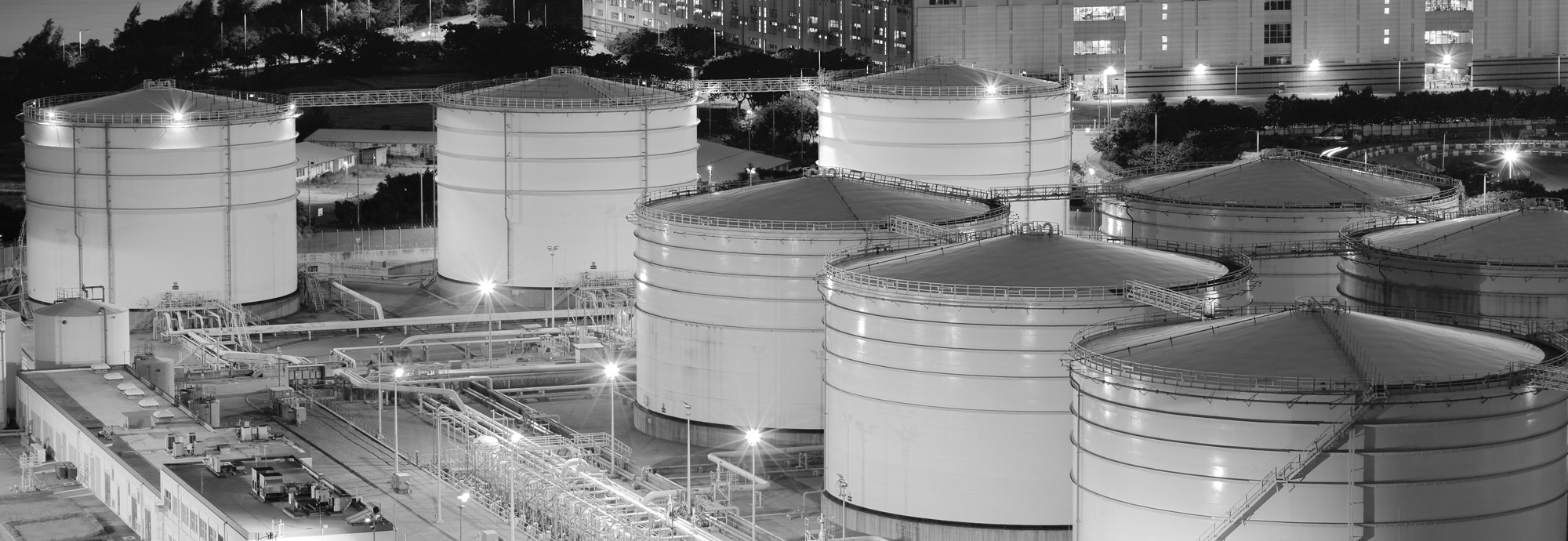
A thermal energy storage system is essentially a large, insulated tank that stores chilled water. During off-peak hours—typically overnight when electricity rates drop—your chillers run to produce cold water, which gets stored in the tank. During peak demand periods the next day, that stored chilled water gets circulated through your building’s cooling system instead of running the chillers at expensive daytime rates.
The technology relies on thermal stratification, a natural phenomenon where warm water rises to the top of the tank and cold water settles at the bottom. A thin transition layer called the thermocline separates the two temperature zones. Specially designed diffusers at the top and bottom of the tank ensure water enters and exits smoothly without disrupting this stratification.
This isn’t experimental technology. Stratified chilled water storage has been deployed successfully for over 30 years in thousands of buildings worldwide, from small office buildings to massive district cooling systems serving entire campuses.
Off Peak Energy Solutions That Cut Demand Charges in Half

The financial case for TES tanks centers on one simple reality: electricity costs dramatically more during peak demand periods. In New York, the difference between off-peak and on-peak rates can be 40-60% or higher. When you operate chillers during the day to meet cooling loads, you’re paying premium rates for every kilowatt-hour.
TES systems flip that equation. You produce chilled water at night when rates are lowest and ambient temperatures are cooler, which also means your chillers operate more efficiently. Then during the afternoon when everyone’s air conditioning is running and the grid is strained, you’re drawing from stored thermal energy instead of firing up expensive equipment.
The impact on your utility bill shows up in two places. First, you dramatically reduce peak demand charges—the portion of your bill based on your highest electricity usage during the month. Many facilities see 30-40% reductions in demand charges after installing TES. Second, you shift consumption to off-peak hours when the per-kilowatt-hour rate is lower, reducing your total energy costs.
For buildings in Nassau County, NY and across Long Island, where PSEG and National Grid offer time-of-use rates, this matters. The utilities also provide incentives specifically for TES installations—typically $200 to $1,000 per kilowatt of peak demand reduction—because thermal storage helps them avoid building expensive new generating capacity. Some facilities recover their TES investment in under five years purely from energy savings and utility rebates.
Beyond the direct cost savings, TES provides operational flexibility. If electricity prices spike unexpectedly (which can happen with real-time pricing structures), you’re insulated because you’re not dependent on running chillers during those high-cost periods. You’ve already stored the cooling capacity you need.
There’s also a maintenance angle that doesn’t get enough attention. When you shift chiller operation to nighttime, you’re running equipment during cooler ambient conditions. Chillers work less hard to achieve the same cooling output, which reduces wear and extends equipment life. You’re getting better efficiency and potentially delaying the need for costly replacements.
Chilled Water Storage Solutions for Hospitals and Data Centers
For hospitals, data centers, and other facilities where cooling cannot fail, TES tanks function as thermal batteries that provide backup capacity. If your chiller plant trips offline—whether from a power outage, equipment failure, or planned maintenance—the stored chilled water keeps your critical systems running while backup power comes online and chillers restart.
This isn’t theoretical. Data centers are increasingly specifying TES tanks precisely because they need 10-15 minutes of cooling capacity to bridge the gap between a power failure and generator startup. Hospitals use TES for the same reason, ensuring patient care areas and surgical suites maintain temperature control during system transitions.
The backup capacity is essentially free once the tank is installed. You’re already producing and storing chilled water daily for energy cost management. That same stored capacity automatically provides resilience during outages. Compare this to installing redundant chiller capacity, which requires significant capital investment and ongoing maintenance for equipment that mostly sits idle.
TES tanks also enable facility expansions without proportional increases in chiller capacity. Let’s say you’re adding a new wing to your hospital or expanding your campus. Conventionally, you’d need to install additional chillers, cooling towers, and associated infrastructure to handle the increased load. With TES, you can often meet the new demand by increasing storage capacity and running your existing chillers longer during off-peak hours. The capital cost difference is substantial—thermal storage tanks cost $100-$200 per ton-hour installed, while new chiller plants run significantly higher.
Operationally, this matters because you’re not adding complexity to your mechanical systems. More chillers mean more maintenance, more points of failure, and more operator training. A TES tank, by contrast, has no moving parts. Once it’s installed and properly insulated, it requires minimal maintenance and can operate reliably for 40 years or more.
For facilities in Nassau County, NY facing space constraints—which is common on developed campuses and urban sites—TES tanks can be designed as underground installations. Burying the tank below a parking lot or under a building foundation saves valuable surface area while providing natural insulation that reduces heat gain and improves system efficiency. The concrete or steel tank structure is engineered to handle the load, and the buried configuration actually enhances performance.
TES Tanks for Buildings: What to Consider Before Installation
Not every building needs thermal energy storage, and not every TES system looks the same. The decision to install one and how to configure it depends on your facility’s specific cooling loads, utility rate structure, available space, and operational goals.
Buildings that benefit most from TES have high cooling loads with significant peaks during the day, access to time-of-use electricity rates with meaningful off-peak discounts, and either plans for facility expansion or aging chiller equipment due for replacement. Universities, hospitals, office complexes, and government facilities in Nassau County, NY typically check all these boxes.
The sizing calculation is straightforward in concept but requires detailed engineering. You need to know your peak cooling load, the duration of that peak, and how much load you want to serve from storage versus from chillers running in real-time. Some systems are designed for full storage, where all daytime cooling comes from the tank and chillers only run at night. Others use partial storage, where the tank handles peak loads while chillers cover base load throughout the day.
Sustainable Energy Storage That Meets New York Decarbonization Requirements
New York State has set aggressive targets for building decarbonization and energy efficiency under the Climate Leadership and Community Protection Act. By 2030, the state aims to achieve 185 trillion BTUs of energy savings. The All-Electric Buildings Act, which takes effect in 2026 for buildings under seven stories and 2029 for larger buildings, is pushing new construction away from fossil fuels entirely.
TES tanks support these goals in multiple ways. First, by reducing peak electricity demand, thermal storage lessens the strain on the grid during the times when utilities historically fire up the least efficient, highest-emissions power plants. When your building draws power at night instead of during afternoon peaks, you’re effectively using cleaner energy because nighttime generation relies more heavily on baseload nuclear and renewable sources.
Second, TES enables better integration of renewable energy. Solar and wind generation are variable—they produce power when conditions are right, not necessarily when demand is highest. Thermal storage allows buildings to absorb excess renewable energy when it’s available (by running chillers to produce cold water) and use that stored cooling later when renewable generation drops off. This load-shifting capability is increasingly valuable as the grid incorporates more renewables.
NYSERDA, New York State’s energy research and development authority, offers specific programs and incentives for energy efficiency projects in commercial buildings. TES installations can qualify for support under custom energy efficiency programs, particularly for facilities in Nassau County, NY served by PSEG Long Island. The federal Inflation Reduction Act adds another layer of incentives—thermal energy storage projects that meet certain criteria can access investment tax credits worth up to 50% of costs for projects beginning construction by 2032.
These aren’t small numbers. For a large TES installation, the combination of utility rebates and federal tax credits can cover a substantial portion of upfront costs, dramatically improving payback periods. Facilities that might have faced 7-10 year paybacks without incentives are seeing 3-5 year returns when they factor in available programs.
The sustainability benefits also matter for institutional reputation and tenant attraction. Universities and hospitals increasingly publicize their decarbonization efforts. A visible TES tank, properly designed with attractive exterior finishes, can serve as a physical symbol of a campus’s commitment to energy efficiency. Commercial building owners find that sustainability features attract higher-quality tenants and can command premium rents, particularly as corporate tenants face their own emissions reduction mandates.
Tank Insulation Design and Aesthetic Considerations for Campus Settings
The insulation system on a TES tank isn’t an afterthought—it’s critical to performance. Poor insulation leads to heat gain, which degrades the thermal stratification inside the tank and reduces the amount of usable cooling capacity you can store. Over time, inadequate insulation means your system underperforms and you don’t achieve the energy savings you planned for.
Properly designed tank insulation maintains the temperature differential between the chilled water at the bottom of the tank and the warmer water at the top. This requires careful material selection and installation. Common insulation materials include polyisocyanurate foam, fiberglass, polystyrene, and foam glass, each with different thermal resistance properties and suitability for various temperature ranges. The insulation is typically covered with an exterior sheathing—stainless steel, painted steel, or aluminum—that protects against weather and mechanical damage.
For cold storage applications like TES tanks, a vapor barrier is essential. Without it, moisture from the air condenses on the cold tank surface and migrates through the insulation, reducing its effectiveness and potentially causing corrosion. The vapor barrier must be continuous and properly sealed at all joints and penetrations.
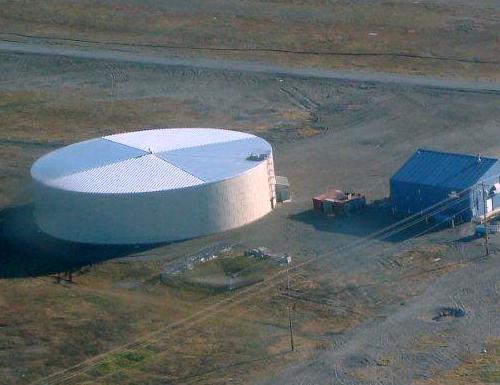
The exterior appearance of the insulation system matters more than you might expect, especially for above-ground installations on campus settings or visible locations. Modern insulation systems can be finished in various colors and textures to complement surrounding architecture. Some facilities choose neutral tones that allow the tank to blend into the background. Others opt for bold colors or branding that makes the TES tank a visible statement about the facility’s commitment to sustainability.
For facilities where aesthetics are a priority, the tank can be designed with architectural screening, landscaping, or integration into the building structure. Underground installations eliminate visual impact entirely while providing natural insulation from the surrounding earth. The choice depends on site constraints, budget, and institutional preferences.
The key is working with a specialized contractor who understands both the thermal performance requirements and the aesthetic considerations. Generic tank insulation doesn’t meet the specific demands of thermal energy storage. You need expertise in maintaining thermal stratification, preventing heat gain, and designing systems that perform reliably for decades in your local climate conditions. For facilities in Nassau County, NY, that means accounting for humid summers and cold winters, both of which affect insulation performance.
A well-designed and properly insulated TES tank requires virtually no maintenance beyond periodic inspections. The insulation system protects the tank structure, the diffuser system has no moving parts, and the stored water is typically treated to prevent biological growth. Compare this to chiller equipment, which requires regular maintenance, refrigerant management, and eventual replacement of wearing components. The simplicity of TES is part of its economic appeal.
Making the Decision on Thermal Energy Storage Systems
Thermal energy storage isn’t right for every building, but for large facilities in Nassau County, NY with significant cooling loads and access to time-of-use electricity rates, the economics are increasingly compelling. The combination of direct energy savings, utility incentives, federal tax credits, and avoided equipment costs often produces payback periods under five years—sometimes considerably less.
The technology is proven. The operational benefits extend beyond cost savings to include backup capacity, grid resilience, and support for decarbonization goals. And the long-term performance track record shows that properly designed TES systems operate reliably for 40 years or more with minimal maintenance.
If you’re facing chiller replacement, planning a facility expansion, or simply looking for ways to reduce energy costs and meet New York State’s efficiency mandates, thermal energy storage deserves serious evaluation. The key is working with experienced partners who understand both the thermal engineering and the critical role that insulation plays in long-term system performance.
We’ve specialized in tank insulation systems since 1971, with specific expertise in thermal energy storage applications. We design and install customized insulation solutions that maintain thermal performance, protect against heat gain, and can be finished to meet aesthetic requirements for any facility.