


05 Mar Applications of Tank Insulation Across Industries
Summary:
Wastewater Tank Insulation Requirements And Challenges
Wastewater treatment relies on biological processes that only function within specific temperature ranges. When your digesters drop below the necessary operating temperature, bacterial activity slows or stops entirely. The treatment process fails. You’re looking at regulatory violations, discharge issues, and the time and cost required to restart biological systems.
Most wastewater digesters operate between 86°F and 104°F. Below 39°F, the bacteria that break down waste materials become dormant. That’s not a gradual slowdown—it’s a full stop. The challenge isn’t just maintaining heat during operation. It’s protecting these systems during shutdowns, overnight temperature drops, and seasonal cold snaps that Nassau County, NY facilities experience. You need wastewater tank insulation that maintains consistent temperatures despite what’s happening outside the tank.
How Wastewater Digesters Lose Heat Without Proper Insulation
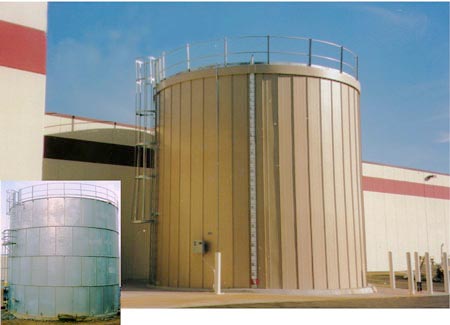
Heat loss in wastewater tanks happens through three main paths: the tank walls, the roof, and the base. Most facilities focus on walls and roofs because they’re visible and accessible. But the base often represents the largest source of constant heat loss, especially when tanks aren’t filled to capacity.
Even at 10% capacity, the entire tank bottom remains in 100% contact with the liquid inside. That creates a massive surface area for heat transfer directly into the ground. The walls and roof only lose heat where liquid is present, but the bottom never gets a break. Ground temperatures vary seasonally, but they’re consistently cooler than the 86-104°F range your digesters need to maintain.
The construction materials matter too. Concrete and steel tanks conduct heat differently. Welded steel offers certain structural advantages but requires careful attention to thermal bridging at seams and joints. Bolted construction creates different challenges. The shape of your tanks—whether they have conical bottoms, flat roofs, or spherical tops—affects how you approach insulation coverage.
Water intrusion is the other major issue. Digesters operate in humid environments with potential for condensation, spray, and direct water exposure. If moisture penetrates your insulation, you lose thermal performance right when you need it most. Wet insulation can reduce effectiveness by 50% or more. It also creates conditions for corrosion under insulation, which leads to structural problems that are expensive to detect and repair.
The biological nature of wastewater treatment adds another layer of complexity. You can’t easily take digesters offline for maintenance or insulation installation. The bacterial colonies you’ve cultivated take weeks to re-establish if you have to drain and restart. Any wastewater tank insulation solution needs to work around your operational schedule, ideally installing while tanks remain in service.
Best Insulation Materials And Systems For Wastewater Applications
Material selection for wastewater tank insulation comes down to moisture resistance, thermal performance, and durability in humid environments. You’re choosing between mineral wool, cellular glass, polyisocyanurate foam, and several other options. Each has specific advantages and limitations for wastewater applications.
Mineral wool offers excellent fire resistance and maintains insulating properties even when wet. That moisture tolerance makes it valuable in wastewater environments where humidity and spray are constant factors. It’s heavier and denser than foam options, which means it requires more substantial support systems. But it also tends to last longer and needs less frequent replacement—important for facilities that can’t afford regular downtime.
Cellular glass is completely non-absorbent. Water can’t penetrate it, which eliminates the moisture-related performance loss you see with other materials. For wastewater applications where tanks are exposed to spray, washdown, or high humidity, cellular glass removes a major variable from the equation. It’s more expensive upfront, but you avoid the performance degradation and replacement costs associated with water-damaged insulation. That’s a trade many facilities in Nassau County, NY make once they calculate the total cost of ownership.
Polyisocyanurate foam provides high thermal resistance per inch of thickness. It’s lightweight and easier to install than mineral wool or cellular glass. The challenge is moisture sensitivity. Standard polyisocyanurate can absorb water and lose effectiveness. For wastewater applications, you need closed-cell foam with proper vapor barriers and weather protection. The jacketing and sealing details become critical to long-term performance.
The installation approach matters as much as the material. Pre-engineered panel systems offer faster installation with less field fabrication. Panels are manufactured to match your tank dimensions and radius, then secured with banding systems that allow for thermal expansion and contraction. This approach works well for retrofit projects where you need to insulate existing tanks without extended downtime.
Spray-applied insulation provides seamless coverage without joints or seams where water can penetrate. It conforms to irregular shapes and fills gaps around penetrations. The tradeoff is that it requires more surface preparation, can be difficult to repair if damaged, and needs regular recoating to maintain UV protection. For wastewater tanks with complex geometries or numerous nozzles and attachments, spray systems can provide coverage that’s difficult to achieve with rigid materials.
Temperature monitoring becomes part of your insulation system, not an afterthought. Low-temperature alarms alert you before biological processes are compromised. Monitoring points at different tank levels help you understand thermal stratification and identify areas where insulation performance may be degrading. This data informs maintenance decisions and helps you maximize the time between major insulation repairs or replacements.
Petrochemical Tank Insulation For Product Protection And Safety
Petrochemical storage presents a different set of challenges entirely. You’re dealing with volatile products, strict safety regulations, and the very real possibility of massive product losses if temperatures aren’t controlled. Lighter petroleum fractions like gasoline and kerosene have boiling points around 104°F. In summer, exposed tank surfaces can reach 175°F or higher. That temperature differential drives evaporation that can cost you 40% of your stored volume.
The safety implications go beyond product loss. Vapor buildup in improperly insulated tanks increases pressure and creates explosion risks. Regulatory agencies including EPA and OSHA have specific requirements for petrochemical storage. API standards govern tank design, inspection, and maintenance. NFPA codes address fire protection and hazardous material handling. Your petrochemical tank insulation system needs to support compliance across all these frameworks while actually performing under real-world conditions.
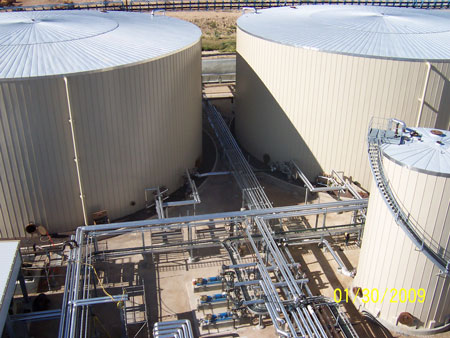
Temperature Control And Evaporation Prevention In Petrochemical Storage
Evaporation losses in petrochemical storage represent one of the largest preventable operating expenses in the industry. When stored products heat up, they expand and vaporize. That vapor either escapes through pressure relief systems or builds up inside the tank. Either way, you’re losing product you’ve already paid for.
The economics are straightforward. A facility storing gasoline, kerosene, or similar light fractions can lose hundreds of thousands of gallons annually to evaporation. At current market prices, that translates to millions in lost revenue. Insulation that reduces solar heat gain pays for itself quickly, often within the first year of operation. That’s not a maybe—it’s basic math that facilities across Nassau County, NY and nationwide have proven repeatedly.
But the calculation isn’t just about product saved. There’s also the environmental compliance angle. Vapor emissions from storage tanks fall under air quality regulations. Facilities in non-attainment areas face stricter limits and higher penalties for violations. Reducing evaporation through better insulation helps you stay within permitted emission levels without installing expensive vapor recovery systems.
The insulation approach for petrochemical tanks focuses on reflectivity and heat rejection. Light-colored or reflective outer surfaces reduce solar absorption. Multiple insulation layers with air gaps create thermal breaks that slow heat transfer. The goal is keeping the tank shell—and therefore the stored product—as close to ambient ground temperature as possible.
Tank roof insulation deserves special attention. The roof receives direct solar exposure for hours each day. It’s also typically the thinnest part of the tank structure, with less thermal mass to buffer temperature swings. Effective roof insulation can reduce internal tank temperatures by 20-30°F, which makes a substantial difference in evaporation rates.
Insulation for heated storage presents the opposite challenge. Products like heavy fuel oil, bitumen, and certain chemicals need to be kept hot to maintain proper viscosity for pumping and processing. Heat loss through tank walls and especially through the base represents wasted energy and potential product quality issues. If heavy products cool too much, they can solidify or become too viscous to move through piping systems. That’s when operations grind to a halt while you figure out how to get product flowing again.
Preventing Corrosion Under Insulation In Petrochemical Facilities
Corrosion under insulation is one of the most expensive maintenance issues in petrochemical operations. It’s hidden beneath insulation layers, often undetected until significant damage has occurred. The cost isn’t just repair and replacement. It’s also the scaffolding, access equipment, production downtime, and safety risks associated with corroded tanks and piping. In oil and gas operations, CUI drives up to 60% of piping maintenance costs. Let that sink in—more than half your maintenance budget going to a problem that’s largely preventable.
CUI happens when moisture gets trapped between insulation and the tank surface. That moisture, combined with temperature cycling and contaminants from the insulation itself or the environment, creates ideal conditions for corrosion. Carbon steel corrodes rapidly. Stainless steel can experience stress corrosion cracking in the presence of chlorides. Even with protective coatings, water intrusion eventually compromises the system.
The temperature range where CUI is most active—roughly 25°F to 350°F—covers the operating conditions for most petrochemical storage. Tanks in this range are at constant risk. The problem accelerates during shutdowns when temperatures drop and condensation forms on tank surfaces.
Prevention starts with keeping water out of the insulation system. That means proper weatherproofing, sealed penetrations, and drainage details that direct water away from the tank rather than trapping it. The insulation material itself matters. Non-absorbent materials like cellular glass don’t hold water, which eliminates one pathway for CUI. Closed-cell foams with intact vapor barriers provide similar protection.
Protective coatings on the tank surface add another layer of defense. Modern coating systems designed specifically for CUI prevention can be applied to hot surfaces during operation, eliminating the need for shutdowns. These coatings create a barrier between the metal and any moisture that does penetrate the insulation. They also provide some corrosion resistance even if the coating is damaged, unlike traditional paint systems that fail completely once compromised.
Inspection access is part of CUI prevention strategy. Removable insulation panels or inspection ports allow you to check for corrosion without removing entire insulation systems. Infrared thermography can identify areas where wet insulation has reduced thermal performance, which often indicates potential CUI locations. Regular inspection schedules based on API RP 583 guidelines help you catch problems early when repairs are simpler and less expensive.
The insulation attachment method affects CUI risk. Systems that use welded studs or clips create hundreds of potential corrosion initiation points. Modern banding systems that don’t penetrate the tank shell eliminate those risks. The bands themselves need to be corrosion-resistant—stainless steel or aluminum rather than carbon steel—to avoid creating galvanic corrosion cells.
Selecting The Right Tank Insulation For Your Industry Application
The insulation system that works for a wastewater digester won’t perform the same way on a petrochemical storage tank. Energy storage facilities have different requirements than fire protection systems. Getting it right means understanding the specific thermal demands, regulatory requirements, and operational constraints of your application.
Material selection, installation approach, and long-term maintenance all factor into performance and cost-effectiveness. The cheapest option upfront often becomes the most expensive over the system’s lifetime when you account for energy losses, product losses, maintenance requirements, and potential failures. A properly engineered insulation system pays for itself through lower operating costs, extended equipment life, and reduced risk of costly shutdowns or regulatory violations.
For facilities in Nassau County, NY and surrounding areas, working with experienced insulation specialists who understand industry-specific requirements makes the difference between a system that performs as designed and one that creates ongoing problems. We’ve been engineering and installing tank insulation systems for over 40 years across wastewater, petrochemical, energy storage, and fire protection applications. Each project starts with understanding your specific operational requirements, regulatory obligations, and performance goals—then designing a system that delivers.